Prozac for Depression: Clinical Data vs Real User Experiences (707 Reviews)
What is Prozac really like? We compare FDA clinical data with 707 real user experiences, covering side effects, emotional blunting, sexual dysfunction, and long-term results.
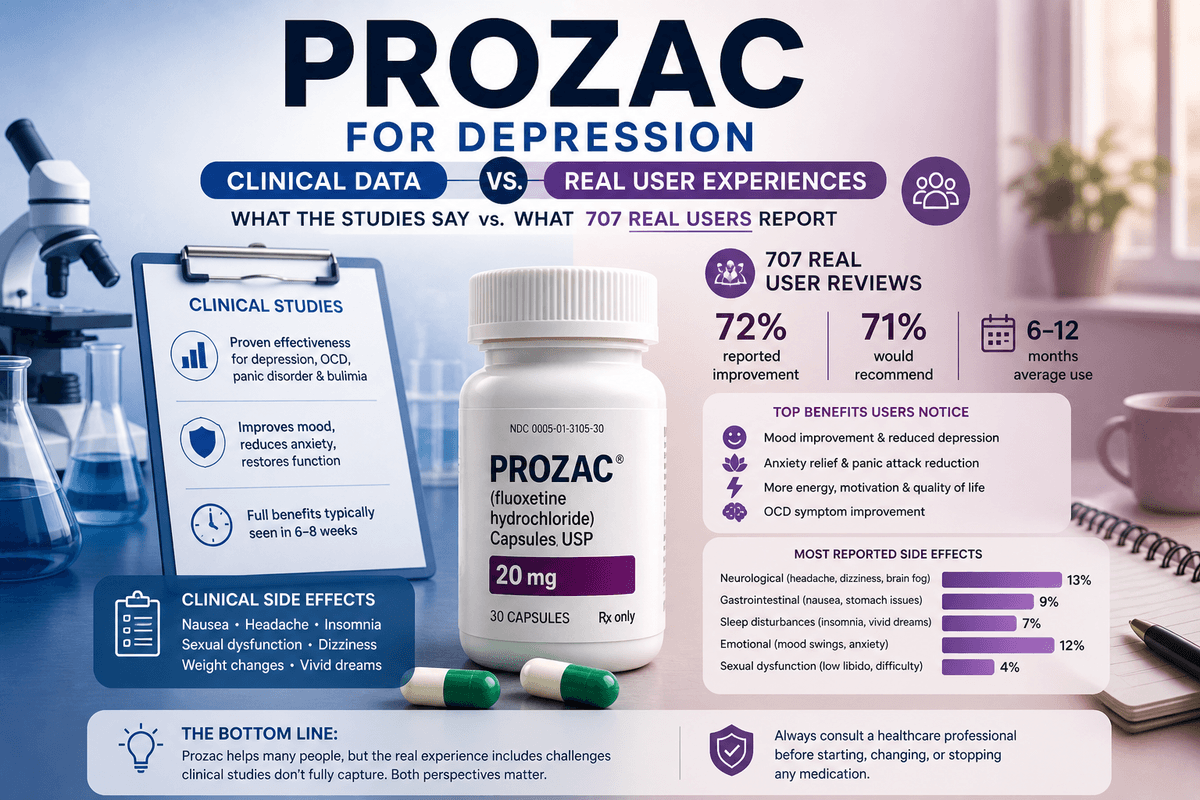
Prozac for Depression: Clinical Data vs Real User Experience
If you're researching Prozac (fluoxetine), you'll find two very different pictures:
- What clinical studies and prescribing information say
- What people who actually take it report day-to-day
These don't always line up. Some effects are well-captured by trials. Others are almost invisible in the data but come up constantly in real reviews.
We analysed 707 user reviews and compared them against clinical prescribing data to show you both sides.
For full ratings, dosage breakdowns, and user reviews, see our
Prozac medication page
What Clinical Data Says About Prozac
Prozac is one of the most prescribed antidepressants in the world. It works by increasing serotonin levels in the brain to regulate mood and behaviour.
It is FDA-approved for:
- Major depressive disorder
- OCD
- Panic disorder
- Bulimia nervosa
What Clinical Studies Report as Benefits
- Reduced depression and anxiety symptoms
- Decreased intrusive thoughts and compulsive behaviours (OCD)
- Improved energy and ability to function day-to-day
- Help with binge eating and bulimia symptoms
Full mood stabilisation typically takes 6 to 8 weeks.
What Clinical Studies Report as Side Effects
- Nausea, headache, dry mouth, dizziness
- Insomnia or drowsiness
- Initial appetite loss, with potential long-term weight gain
- Sexual dysfunction (decreased libido, difficulty with orgasm)
- Agitation or restlessness, vivid dreams
Serious but rare risks include increased suicidal thoughts in young people during early treatment, serotonin syndrome, and seizures.
What 707 Real Users Report
The overall picture from users is positive but more mixed than the clinical data suggests.
- 68% reported improvement
- 67% would recommend Prozac
- Average usage: 6 to 12 months
- Average age: 29
- 71% female, 29% male
The lower recommendation rate compared to some other psychiatric medications reflects how personal the SSRI experience is. It works well for many people, but the path to getting there is rarely smooth.
Benefits Users Actually Notice
Clinical data focuses on measurable symptom scores. Users describe what changes in real life.
Most Reported Benefits
- Mood improvement and reduced depression — 13%
- Anxiety relief and panic management — 15% (combined across categories)
- Increased energy and motivation — 4%
- Overall quality of life improvements — 3%
- OCD symptom reduction — reported as meaningful by a subset of users
What It Feels Like in Practice
Across hundreds of reviews, the most consistent themes are:
- A gradual lifting of the "heaviness" of depression over several weeks
- Feeling more able to handle day-to-day situations without being overwhelmed
- Reduced frequency and intensity of panic attacks
- Returning interest in activities and relationships
Key insight:
The most valued outcome users describe is not feeling "happy" but feeling functional again — able to work, maintain relationships, and engage with life without constant emotional weight.
Side Effects Users Actually Report
Side effects are common. 39% of users report experiencing them, which is notably higher than the clinical trial discontinuation rates suggest.
Most Reported Side Effects
- Neurological (headaches, dizziness, fatigue, brain fog) — 13%
- Gastrointestinal (nausea, stomach pain, diarrhea) — 9%
- Sleep disturbances (insomnia, vivid dreams, night sweats) — 7%
- Emotional disturbances (mood swings, anxiety, crying spells) — approx. 12% combined
- Sexual dysfunction (low libido, difficulty orgasming) — 4%
What Stands Out
- Neurological and GI effects are the most commonly mentioned, consistent with clinical data
- Emotional side effects are likely undercounted due to overlapping categories in the data
- Sexual dysfunction at 4% almost certainly underrepresents the real figure (more on this below)
Where Clinical Data and User Experience Match
Nausea and GI Symptoms
One of the most consistent findings across both datasets. Clinical trials flag it prominently and 9% of users independently report it. It tends to be worst in the first few weeks and often improves, which is why many users push through it.
Sleep Disruption
Insomnia and vivid dreams appear in both clinical reports and user reviews at similar rates. Prozac's activating effect on serotonin can interfere with sleep, particularly early in treatment.
Headaches and Dizziness
Appear in clinical data as common early side effects and confirmed by 13% of users in the neurological category.
Anxiety Relief
Both clinical studies and users agree Prozac is effective for anxiety. Users specifically highlight panic attack reduction as a standout benefit.
Where the Real Experience Differs
This is where the data gets interesting.
1. Emotional Blunting Is Underreported in Trials
Clinical studies track depression scores. If your score improves, the medication is working.
What they don't track: users feeling emotionally flat, numb, or detached. Not sad, not happy, just muted.
This shows up across user reviews as:
- "I don't feel depressed but I don't feel anything either"
- Reduced ability to cry or feel deeply
- Emotional distance in relationships
It's buried under "Psychological Effects" and "Emotional Disturbances" in the data, but it's one of the most frequently discussed long-term experiences in Prozac reviews and a leading reason people stop taking it. Clinical rating scales don't capture it well.
2. Sexual Dysfunction Is Dramatically Underreported
Only 4% of users explicitly mention sexual dysfunction in their reviews.
Clinical trials report it in roughly 15% of patients. Real-world research puts the figure anywhere from 40 to 70%.
So why does only 4% mention it?
- People don't write about sexual side effects in public reviews
- It develops gradually and gets normalised
- Many don't connect it to the medication
- There is still significant stigma around discussing it
The gap between 4% (user reviews), 15% (clinical trials), and 40 to 70% (real-world studies) tells you everything about how poorly this side effect is tracked at every level. It is likely the most common reason people quietly stop taking Prozac without telling their doctor.
For more context on how side effects get reported and why the numbers often don't tell the full story, read our guide on understanding medication side effects.
3. The 6 to 8 Week Wait Is Hard to Overstate
Clinical data mentions the adjustment period. What it doesn't convey is how difficult those first weeks can be for a significant portion of users.
Many reviews describe:
- Feeling worse before feeling better
- Increased anxiety in the first 1 to 2 weeks
- Nausea, fatigue, and disrupted sleep all hitting at once
- Uncertainty about whether to push through or stop
For a deeper look at what this period involves and how to manage it, see our post on the antidepressant adjustment period.
4. Long-Term Weight Changes
Clinical trials typically run 8 to 12 weeks. They often show initial appetite loss or modest weight loss.
What users on Prozac for 6 months or longer frequently report is the opposite: gradual weight gain that wasn't mentioned by their doctor and isn't prominent in the prescribing information. It doesn't show up in short trials because it develops slowly.
Who Is Actually Taking Prozac?
The real-world user population differs from clinical trial populations:
- Average age: 29
- 71% female
- Typical dose: 20 to 80 mg daily
- Average usage: 6 to 12 months
- Overall rating: 3.5 / 5
The younger, heavily female demographic reflects who is most commonly diagnosed with depression and anxiety in practice. Clinical trials have historically underrepresented this group, particularly around hormonal interactions with SSRIs.
Is Prozac Effective?
Based on both datasets:
The good:
- Works for most people who stick with it
- Particularly strong for anxiety and OCD alongside depression
- Well-tolerated once past the adjustment period for many users
The caveats:
- The first 6 to 8 weeks are genuinely difficult for a significant minority
- Sexual side effects are far more common than any published number suggests
- Emotional blunting is real and worth discussing with your doctor upfront
- Long-term weight changes are underrepresented in trial data
Final Thoughts
Prozac has helped millions of people and the clinical evidence for its effectiveness is strong. But the full picture only emerges when you look at what users actually report over months of real use.
Clinical data tells you what's measurable and what happens in controlled conditions. Users tell you what the adjustment feels like, what side effects people don't mention to their doctors, and what life looks like a year in.
Both matter when you're making a decision.
For full side effect breakdowns, dosage data, and real user reviews:
Explore our Prozac data page
You might also find useful:
Vyvanse: Clinical Data vs User Experience
5 Common Myths About ADHD Medication
Lexapro user reviews and side effects
Zoloft user reviews and side effects
This article is for educational purposes only and does not replace medical advice. Always consult a qualified healthcare professional before starting, changing, or stopping any medication.
Looking for medication information?
Search our database to see real patient experiences and side effect data for thousands of medications.
Search Medications