Vyvanse for ADHD: Clinical Trial Results vs Real User Experiences (What Actually Happens)
What is Vyvanse really like for ADHD? We compare FDA clinical trial data with 483 real user experiences — including side effects, long-term use, and quality of life changes.
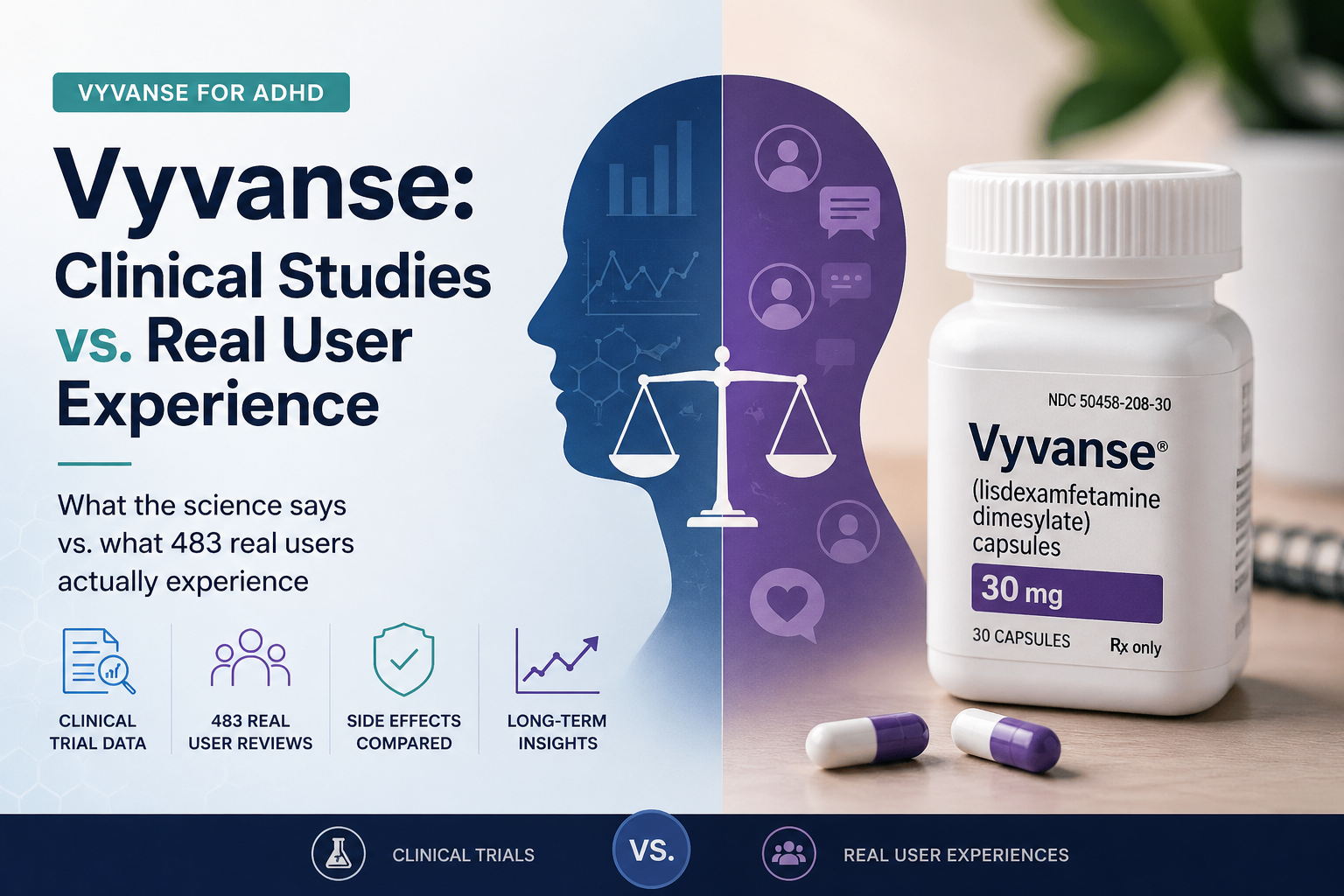
Vyvanse for ADHD: Clinical Trials vs Real User Experience
If you’re researching Vyvanse for ADHD, you’ll usually find two very different perspectives:
- Clinical trial data (what doctors and regulators rely on)
- Real-world user experiences (what people actually feel day-to-day)
The problem? These two don’t always match.
In this post, we break down what Vyvanse clinical studies show vs what 483 real users report — including side effects, long-term effectiveness, and what it actually feels like to take it.
For full ratings, dosage breakdowns, and user reviews, see our
Vyvanse medication page
What Do Vyvanse Clinical Trials Actually Show?
Vyvanse (lisdexamfetamine) is FDA-approved for:
- ADHD (children, adolescents, adults)
- Binge Eating Disorder
Most studies are short-term (4–12 weeks) and highly controlled.
According to the official prescribing data:
Common Vyvanse Side Effects in Clinical Trials
- Decreased appetite (up to 39% in children)
- Insomnia (up to 23%)
- Dry mouth
- Anxiety
- Nausea
- Weight loss
Discontinuation rates:
- ~4% in adolescents
- ~6% in adults
These trials are designed to answer: “Does Vyvanse reduce ADHD symptoms safely over a short period?”
They are not designed to answer:
- What Vyvanse feels like long-term
- How it affects mood, relationships, or personality
- Whether tolerance builds over time
What Is Vyvanse Actually Like? (483 User Experiences)
When you look at real users, the picture becomes much more detailed.
- 77% reported improvement
- 75% would recommend Vyvanse
- Average usage: 1–2 years
This gives insight into something clinical trials miss: long-term lived experience of Vyvanse for ADHD
Benefits of Vyvanse (Real User Reports)
Clinical studies focus on symptom scores.
Users describe something more practical: how their day actually changes.
What Improves Most
- Focus & mental clarity — 19%
- Mood & reduced anxiety — 14%
- Emotional stability — 9%
- Clearer thinking / less brain fog — 6%
- Productivity — 5%
- Energy & motivation — 5%
What This Feels Like Day-to-Day
Across hundreds of reviews, the experience is surprisingly consistent:
- Tasks feel easier to start — and actually get finished
- Thoughts become quieter and less scattered
- Emotions feel more stable and manageable
- Daily life feels more structured and under control
Key insight:
What people mean when they search “what does Vyvanse feel like for ADHD” isn’t symptom reduction — it’s regaining control over focus, behaviour, and emotional stability.
Vyvanse Side Effects in Real Life
Side effects are still common — but they show up differently outside clinical trials.
Most Reported Side Effects
- Neurological (anxiety, brain fog, headaches) — 34%
- Gastrointestinal (dry mouth, nausea) — 6%
- Cardiovascular (heart rate, palpitations) — 5%
- Sleep issues (insomnia, fatigue) — 4%
- Mood changes (irritability, depression) — 4%
What Stands Out
- Neurological effects are by far the most common
- Many users describe feeling overstimulated or “wired”
- Side effects often change over time, rather than staying fixed
Key insight:
Roughly 1 in 3 users report side effects, with neurological symptoms dominating — a pattern that short-term trials don’t fully capture.
Where Clinical Data and Real Experience Match
Some effects are extremely consistent:
Appetite Loss & Weight Changes
- Strongly reported in both trials and users
- One of the most predictable Vyvanse effects
Insomnia
- A top reason for discontinuation in trials
- Still common in real-world use
Anxiety
- Appears in both datasets
- Often dose-dependent
Heart Rate / Blood Pressure
- Measured clinically
- Reported subjectively by users
These are the most reliable, evidence-backed Vyvanse side effects
Where Vyvanse Feels Different in Real Life
This is where things get interesting.
1. Neurological Side Effects Are Much Broader
Clinical trials mention:
- Anxiety
- Irritability
Users report:
- Brain fog
- Memory issues
- Overstimulation
- Mental “crashes”
34% reporting neurological effects suggests this is underrepresented in trials.
2. Emotional Blunting & Mood Changes
This is one of the most searched long-tail topics:
“Does Vyvanse change your personality?”
Users describe:
- Emotional numbness
- Mood swings
- Reduced empathy
- Relationship strain
These are rarely captured in short-term studies — but matter hugely in real life.
3. The Biggest Benefit Isn’t Measured
Clinical trials track:
- ADHD symptom scores
Users describe:
- Better relationships
- Less impulsive behavior
- Reduced substance use
- Feeling “in control”
This is the quality-of-life effect of Vyvanse, and it’s largely invisible in clinical data.
4. Long-Term Use & Tolerance
A major gap in research:
Users report:
- Reduced effectiveness over time
- Dose adjustments
- Hormonal effects (especially in women)
This aligns with searches like:
- “does Vyvanse stop working over time”
- “Vyvanse tolerance ADHD”
But it’s almost absent from trials.
Who Typically Takes Vyvanse?
Real-world users differ from clinical populations:
- Average age: 35
- 65% female
- Typical dose: 30–70 mg
- Usage: 1–2 years
This highlights a key gap: Adult women with ADHD are underrepresented in clinical trials
Is Vyvanse Effective for ADHD?
Based on both datasets:
✔ Works for most people
✔ Strong improvement rates (81%)
✔ High recommendation rate (79%)
But:
⚠ Side effects are broader than expected
⚠ Emotional effects are under-discussed
⚠ Long-term experience differs from trials
Final Thoughts: Clinical Data vs Reality
Vyvanse is a highly effective ADHD medication — but the full picture only emerges when you combine science with lived experience.
Clinical trials tell you:
- What’s measurable
- What happens short-term
Users tell you:
- What it feels like
- What happens after months or years
You need both.
For full breakdowns, side effects, and real user reviews:
Explore our Vyvanse data page
You might also like:
5 Common Myths About ADHD Medication
Understanding Medication Side Effects
Adderall user reviews and side effects
This article is for educational purposes only and does not replace medical advice. Always consult a qualified healthcare professional before starting or changing medication.
Looking for medication information?
Search our database to see real patient experiences and side effect data for thousands of medications.
Search Medications